 TopWeb3
Key Data
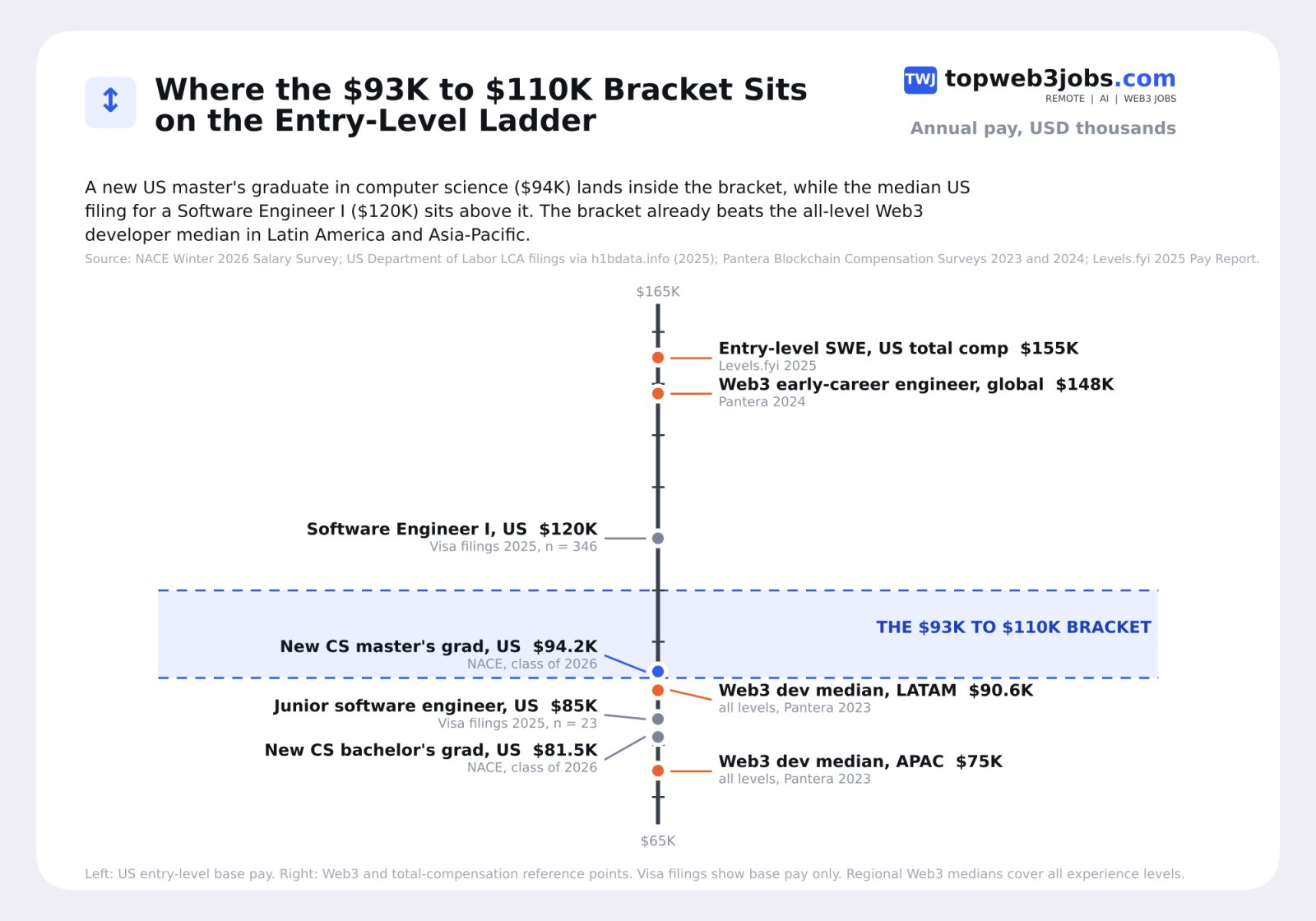
- New US computer science graduates are projected to start at $81,535 with a bachelor's degree and $94,212 with a master's, according to NACE
- The 2025 median base in US visa filings was $85,000 for "Junior Software Engineer" and $120,000 for "Software Engineer I"
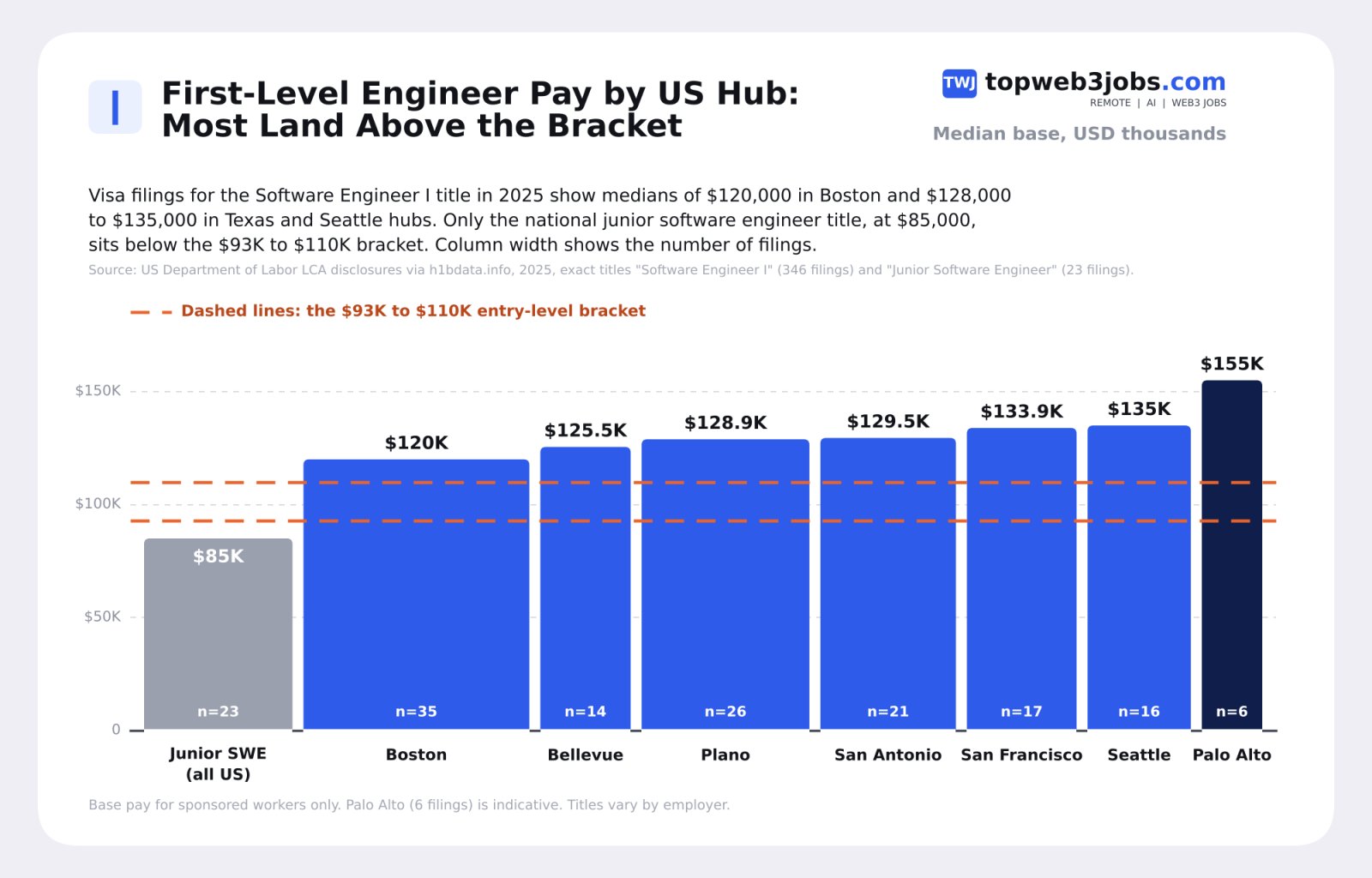
- Software Engineer I medians ranged from $120,000 in Boston to $135,000 in Seattle in 2025
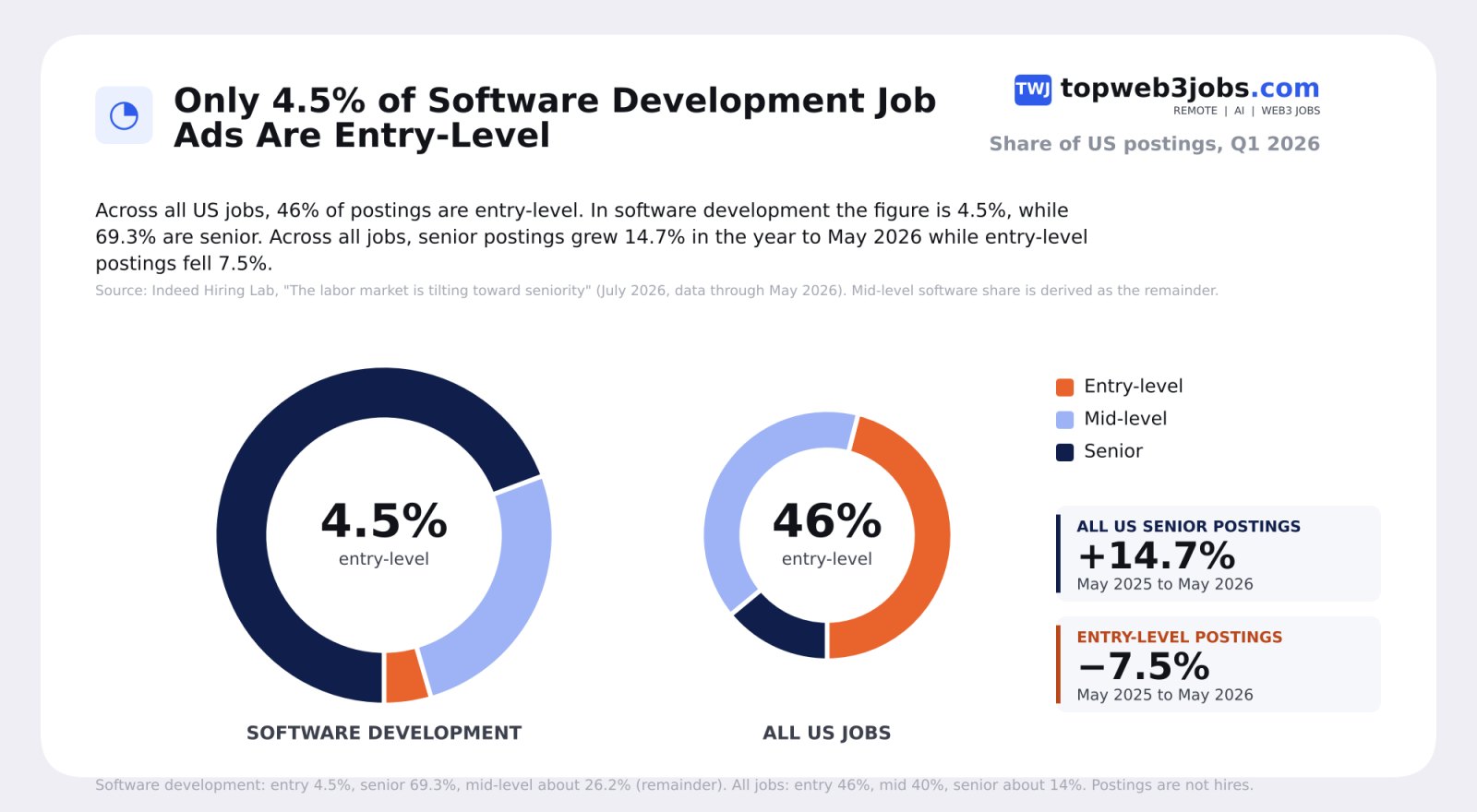
- Only 4.5% of US software development job postings were entry-level in Q1 2026, against 46% across all jobs
- Across all US jobs, senior postings rose 14.7% in the year to May 2026, while entry-level postings fell 7.5%
- Pantera's 2023 survey put the all-level Web3 developer median at $90,559 in Latin America and $75,000 in Asia-Pacific, both below the bracket
Defining the $93K to $110K Bracket
There is no single official salary for a junior engineer. Titles, company size and location all change the number. The bracket in this report is a TopWeb3Jobs framing, built around the data points that cluster in that range.
The clearest anchor is graduate pay. The NACE Winter 2026 Salary Survey projects an average starting salary of $94,212 for computer science master's graduates in the class of 2026, up 10.9% from the year before. Bachelor's graduates in computer science are projected to start at $81,535, up 6.9%.
US visa filings fill in the job titles. In 2025, the 23 filings for "Junior Software Engineer" had a median base of $85,000. The 346 filings for "Software Engineer I", the first rung at many larger employers, had a median of $120,000.
So the bracket covers the gap between a graduate starting salary and a first-level engineer at a larger company. It is where many junior engineers land in their first year or two, especially at smaller firms and startups.
What Junior Pay Looks Like Across US Hubs
City makes a clear difference, even at the bottom of the ladder.
Visa filings for Software Engineer I in 2025 show a median of $120,000 in Boston, the city with the most filings. Bellevue came in at $125,500, Plano at $128,891 and San Antonio at $129,480. San Francisco reached $133,900 and Seattle $135,000. Palo Alto, with only six filings, showed $155,000.
Every one of these hub medians sits above the $93K to $110K bracket. That tells a junior engineer two things. A first-level title at a large US employer in a major hub usually pays more than the bracket. And an offer inside the bracket is more typical of smaller companies, junior titles or locations outside those hubs.
Total pay adds more at the top end. Levels.fyi puts median total compensation for entry-level software engineers in the US at $155,000 in 2025, once stock and bonus are included.
Crypto pays early-career engineers well too. Pantera's 2024 survey found a global median of $148,021 for early-career Web3 engineers, after a 25.6% jump in a year.
What the Bracket Means Outside the US
For remote juniors outside the US, the bracket is a strong number.
Pantera's 2023 survey put the median Web3 developer salary, across all experience levels, at $90,559 in Latin America and $75,000 in Asia-Pacific. A junior engineer on a US-level offer of $93,000 to $110,000 would out-earn the typical developer in both regions, not just the typical junior.
Prices widen the gap further. By World Bank 2024 price levels, a US-dollar salary goes about 2.2 times as far in Brazil and Argentina, 2.8 times in Colombia and 3 times in the Philippines. On that basis, $100,000 earned in Colombia buys roughly what $282,000 buys in the US.
Demand for these hubs is rising. Deel's Global Hiring Report 2025 found foreign hiring up 53% in Brazil and Mexico and 49% in Colombia, with Buenos Aires, Bogotá and São Paulo the top Latin American cities for remote contractors.
Some crypto companies hire early-career talent directly in Asia. Binance's accelerator program is recruiting software engineers and data scientists remotely across Asia, one of the few structured entry routes on the board right now.
The Catch: Junior Roles Are Scarce
The bracket is attractive. Getting into it is the hard part.
The Indeed Hiring Lab analysis of seniority in job postings found that only 4.5% of US software development postings were entry-level in Q1 2026. Senior roles made up 69.3%. Across all occupations, by contrast, 46% of postings were entry-level.
The trend is moving away from juniors. Across all US jobs, senior postings rose 14.7% in the year to May 2026, while entry-level postings fell 7.5%.
Crypto shows the same squeeze. Artemis data reported by CoinDesk found first-year crypto developers fell 58% between early 2025 and March 2026. Our own research on the 45% surge in protocol and AI job postings found job postings rising while the pool of newcomers shrank.
Job titles reflect this. Among the 58 engineering openings listed on TopWeb3Jobs today, none of the first 25 carries a junior, associate or entry-level title.
How Junior Engineers Can Land in the Bracket
The steps below are a TopWeb3Jobs editorial guide based on the data above.
Apply beyond the "junior" label. With so few roles titled junior, many early-career engineers are hired into roles with no level in the title. Read the requirements, not the title.
Target structured programs. Accelerators, internships and graduate programs are among the few routes built for early-career hires. They often lead to full-time offers.
Use the master's benchmark. The NACE master's figure of $94,212 is a reasonable floor for a junior with a graduate degree. Without one, the bachelor's figure of $81,535 is the more realistic starting point.
Price remote offers by where the company pays, not where you live. A US company paying from a US band can put a remote junior well above local medians. Ask how pay is set before you negotiate.
Build a public track record early. Experienced developers win most of the new roles. A visible history of merged code and shipped projects is the fastest way to stop looking like a junior.
Read the Numbers With Care
NACE figures are employer projections for new graduates and cover base salary only.
Visa filings show base pay for sponsored workers. Titles vary between employers, and some city samples are small, especially Palo Alto.
Pantera's regional medians are from 2023 and include all experience levels, not only juniors.
Indeed's figures measure job postings, not hires. A posting share does not show how many juniors are actually hired.
What to Watch Next
First, graduate pay. Master's-level computer science offers rose almost 11% for the class of 2026. If that continues, the bottom of the bracket will move up.
Second, the senior tilt. If entry-level postings keep falling while senior postings grow, competition for junior roles will intensify.
Third, global junior hiring. As US companies hire more in Latin America and Asia-Pacific, more junior remote roles may be priced from US bands, which would make this bracket a common offer outside the US.
The data supports one clear conclusion today: the $93K to $110K bracket is a fair price for a junior distributed engineer and a very strong one outside the US, but with entry-level roles at 4.5% of software job ads, the hardest part is getting the offer.
Sources:
- NACE, Winter 2026 Salary Survey (February 2026): projected starting salaries for computer science graduates; US Department of Labor LCA disclosures via h1bdata.info, 2025: "Junior Software Engineer" and "Software Engineer I" filings by city; Levels.fyi, 2025 Pay Report: entry-level total compensation
- Indeed Hiring Lab, "The labor market is tilting toward seniority" (July 23, 2026): entry-level and senior posting shares and changes; Artemis data via CoinDesk (March 2026): first-year crypto developers
- Pantera Capital, Blockchain Compensation Surveys 2023 and 2024: regional medians and early-career pay; World Bank price levels, 2024; Deel Global Hiring Report 2025 (as reported March 2026); TopWeb3Jobs company, category and research pages (October 2026)